FAQ | Flamenco Dance
Shoes, Attire, and more…
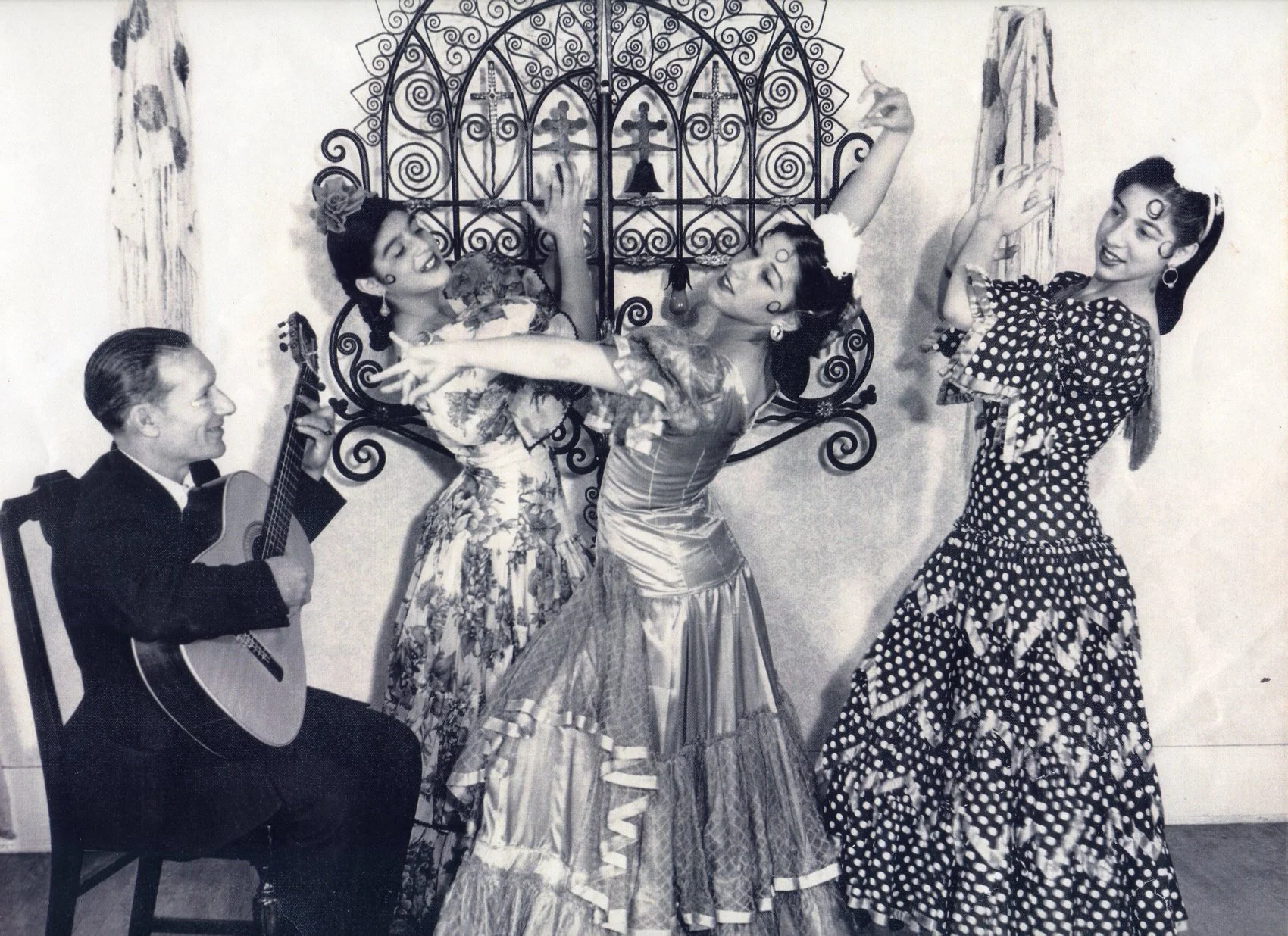
Mi abuelo y mis tías | My grandfather and my aunts. The wrought iron work in the background was crafted by my grandfather José Cortés-Heredia.
Flamenco is for everyone, and it’s completely normal to arrive with questions — about what to wear, which shoes you need, whether you’re “too old,” or where to begin if you’ve never danced before. This FAQ section is here to support you with clear, friendly guidance so you can step into your flamenco journey feeling prepared, confident, and welcomed exactly as you are.
FAQs | Flamenco Dance
Everything You Need to Begin Your Journey.

Flamenco Shoes
Flamenco shoes shape your whole class experience. We’ve got quick answers to help you get the most out of every step.
-
No, not right away. Although flamenco shoes are an important part of your dance study, many beginners start without them. We have a few helpful suggestions to get you started comfortably and safely until you’re ready to invest in proper flamenco shoes.
To learn more, see Where to Buy.
-
If you’re just getting started, you don’t need to invest in flamenco shoes right away. Many beginners begin with simple, comfortable options while they explore the art form and build confidence. Here are a few good choices:
Closed‑toe shoes with a low, sturdy heel — something that feels stable and won’t slip.
Character shoes — a great temporary option if you already own a pair.
Boots with a small heel — as long as they’re supportive and not too heavy.
Avoid sandals, open‑toe shoes, or anything with a soft, flexible sole, as they won’t support footwork safely.
Make sure your shoes have a sturdy heel with a minimum heel height of 1.5″ and no higher than 2.5”.
As you progress, you’ll eventually want to invest in proper flamenco shoes for sound, technique, and foot protection — but there’s no rush. We’ll guide you when the time is right. To learn more, see Where to Buy.
-
No. Your safety is important to us, and the wrong footwear can lead to slips, falls, or injuries. For this reason, the following shoe types are not permitted in class:
Sandals or open‑toed shoes
Stilettos, platforms, or wedge heels
Shoes with rubber soles
Sneakers or athletic shoes
If you’re unsure whether your shoes are appropriate, please check with your instructor. We’re always happy to help you choose something safe and supportive for class.

Studio Policies
Good etiquette keeps our studio safe, welcoming, and beautifully flamenco.
-
This presents a health hazard and liability, and a mess, if it gets stuck on the floor or carpet. (!) No chewing gum will be allowed past the studio doors. Thank you!
-
Hair should be tied up and pulled away from your face.
-
Dangly jewelry should be avoided.
-
Water, proper shoes, and personal items off the floor.
What to wear
What you wear shapes how you move. Here’s how to dress for comfort, clarity, and true flamenco style.
-
Flamenco is a traditional art form, and what we wear helps support both the movement and the spirit of the dance. As you begin your flamenco journey, there are a few practical reasons behind our attire expectations — comfort, safety, freedom of movement, and the ability to see clean technique.
Flamenco “practice” clothing is also an experience in itself. It’s fun, expressive, colorful, and part of the joy of stepping into this art form. Over time, your practice attire becomes a reflection of your personality and your connection to the dance.
-
Skirt
Flamenco dance involves learning to use your skirt — it becomes part of your movement, your expression, and your technique. For the best experience, we recommend a full, ankle‑length skirt with a bit of flair or volume so you can practice marcajes, turns, and skirt work comfortably.
Pants are perfectly fine when you’re just beginning, but eventually you’ll need a skirt for practical training purposes.
You can easily find a practice (rehearsal) skirt online. They’re relatively affordable and come in ready‑to‑wear sizes. See “Where to Buy” for suggestions.
Tops
Choose a comfortable leotard or an athletic/movement‑friendly fitted top that allows your arms and torso to move freely. For clarity of technique, please avoid T‑shirts, as they tend to hide posture and arm placem
-
Shirts
A fitted shirt or athletic/movement‑friendly top works best. Flamenco uses the entire upper body — chest, shoulders, arms — so wearing something that allows your instructor to see posture and placement will support your progress.
T‑shirts are fine as long as they’re fitted and not oversized.
Pants
Flamenco technique relies on clean leg lines, strong posture, and visible footwork. For this reason, we recommend structured, comfortable pants that allow movement without being baggy. Think of something with enough room to bend and stamp, but fitted enough for your instructor to see alignment.
Jeans or overly loose pants make it difficult to move freely and to observe technique, so they’re best avoided. You can easily buy flamenco pants (pantalones flamenco) online. See Where to Buy
-
Phones silenced, minimal talking, tidy studio.
-
Tell your instructor about injuries; listen to your body.
-
We’ll help you choose the class that fits your experience.
-
Due at the start of each session; no refunds once classes begin.
Choosing your flamenco dance class.
Not sure where you fit? Here’s how to choose the class that matches your experience and goals.
-
No prior dance experience is required unless otherwise noted in the class description. Each level includes clear prerequisites to ensure students are placed appropriately and can progress safely and confidently.
Every person's experience is different. Here at CIF our criteria is simple:
• If you have not taken any dance or flamenco dance classes before,
• If you have taken a few classes here and there,
• Or, you studied flamenco a long time ago, we recommend that you start with a Level 1 danceclass.
Level 1 classes are designed to help you build the necessary techniques and muscles to have a safe and pleasurable flamenco experience.
Otherwise, please contact Andréana to figure out which class level suits you.
-
If it’s been a while since you’ve taken a dance class, we recommend starting with one level below your previous class just to start. If you find it too easy you can easily switch classes.
If you’re not sure which class to take then simply dive in and give one of our classes a try.
Just keep in mind that:
1. Suggestions after a long hiatus - Starting at the beginning does not minimize your experience and abilities as a dancer, but rather think of Level 1 as a reintegration process after a long hiatus, where one can gradually work themselves back into shape and reclaim their physical strength and skill.
2. The art of flamenco is a process, we may ask you to attend a different level, depending on the techniques you possess or lack and need more time to improve. This adjustment aims to ensure that you are fully enjoying your experience while also being appropriately challenged throughout your journey in flamenco
-
Not at all! In fact, as with any new skill picked up later in life, learning something new like flamenco actually helps keep your cognitive skills sharp.This key ingredient is patience. We encourage participants to simply enjoy the process. Whether you aspire to be a professional performer, or just want to move your body while making art, or are interested in Spanish culture, you will find classes and community to support you.
-
We’ll notify you promptly of weather or low‑enrollment changes.
-
Keep valuables secure; the studio isn’t responsible for lost items. -
We’ll help you choose the class that fits your experience.
-
Kindness, respect, and inclusion guide everything we do.